Monday, 26 April 2010

23rd April International Children's Festival

The children are the gifts of God to the human beings. They’ve always been the smiling faces of homes. They are also important to have a future. But the independence isn’t less important than having children for a future. Independence is like a child for a country. You can’t survive your country without independence. Years ago, our citizens had a great war. They fought against the entire world, and managed to survive our country. It wasn’t easy to do, but they could. There’s no need to explain how difficult it was. But if we’re interested in history, we can realize why the 23rd April is a festival. It’s because people make festivals to forget difficulties in the past and to celebrate their achievements. Our great leader Mustafa Kemal ATATURK made that date such a good festival that we can celebrate the one beauty with another; The Independence with The Children.

What’s the importance of the date? Every 23rd April we remember the importance of both being independent, living in peace, brotherhood and friendship. Why? It’s because, Many children around the world; from USA, England, Italy, France, Spain, etc. come to Turkey to join our festival. We can have the opportunity to introduce our beautiful country to the world. And we can remind the pain of the wars. In all cities of Turkey, children have different activities. They wear coloured costumes; make several games, shows, etc. They are all made to show how good being independent is. The children from other countries involve the festival, too. They wear traditional dresses, sing folk music, dance and show their culture. In the same time, there’s another aim. It’s to remain the Ataturk’s this word: “Peace at home, peace in world” If we’re friends with other nations, if our children and youth are living in peace, there will never be wars. There will be no need to fight. And why is the date 23rd April? As we know, it’s the date of establishing our Turkish Grand National Assembly. Maybe, some people may think why we celebrate this date as a festival. The answer is; Ataturk thought the basics of Modern Turkish Republic established at that date. So the date is resembles us the first step to independence. That’s why we call the festival as “Independence Festival” And the reason of Ataturk’s dedication this festival to the children is that Turkish Grand National Assembly is like childhood of Turkish Republic. It’s the first age of it. We began to fight to our enemies with the decisions of TGNA, after establishing Turkish Republic we could defeat them. That’s why Ataturk dedicated the 19th May to the youth. And now, Turkish Republic is like a man, living forever.


Saturday, 24 April 2010

Culture Visits 4 - 5

First Place:
First and Second Inonu Wars (a part of the Turkish war of indepence)
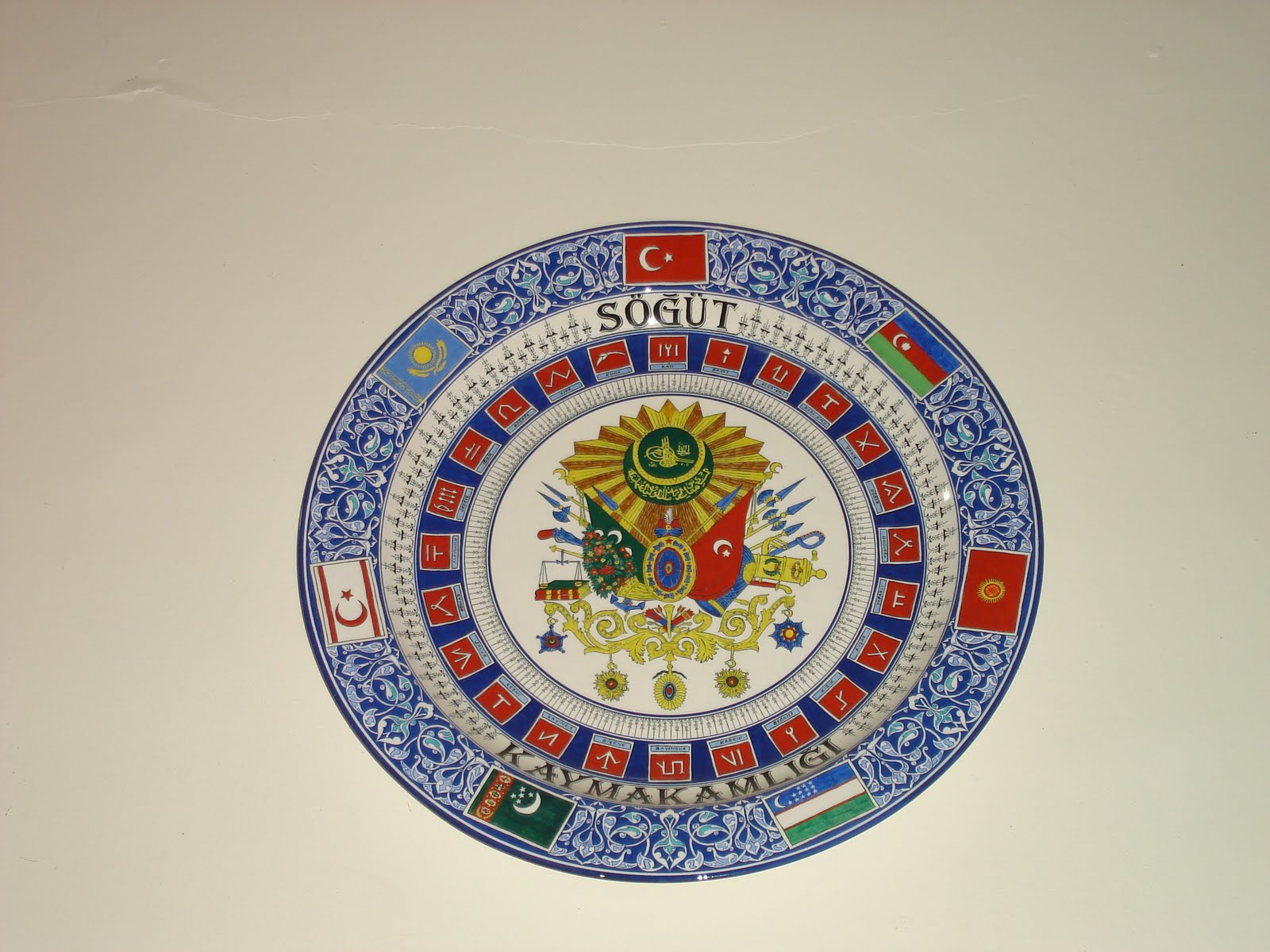
Bilecik, Bozüyük, Söğüt, İnönü

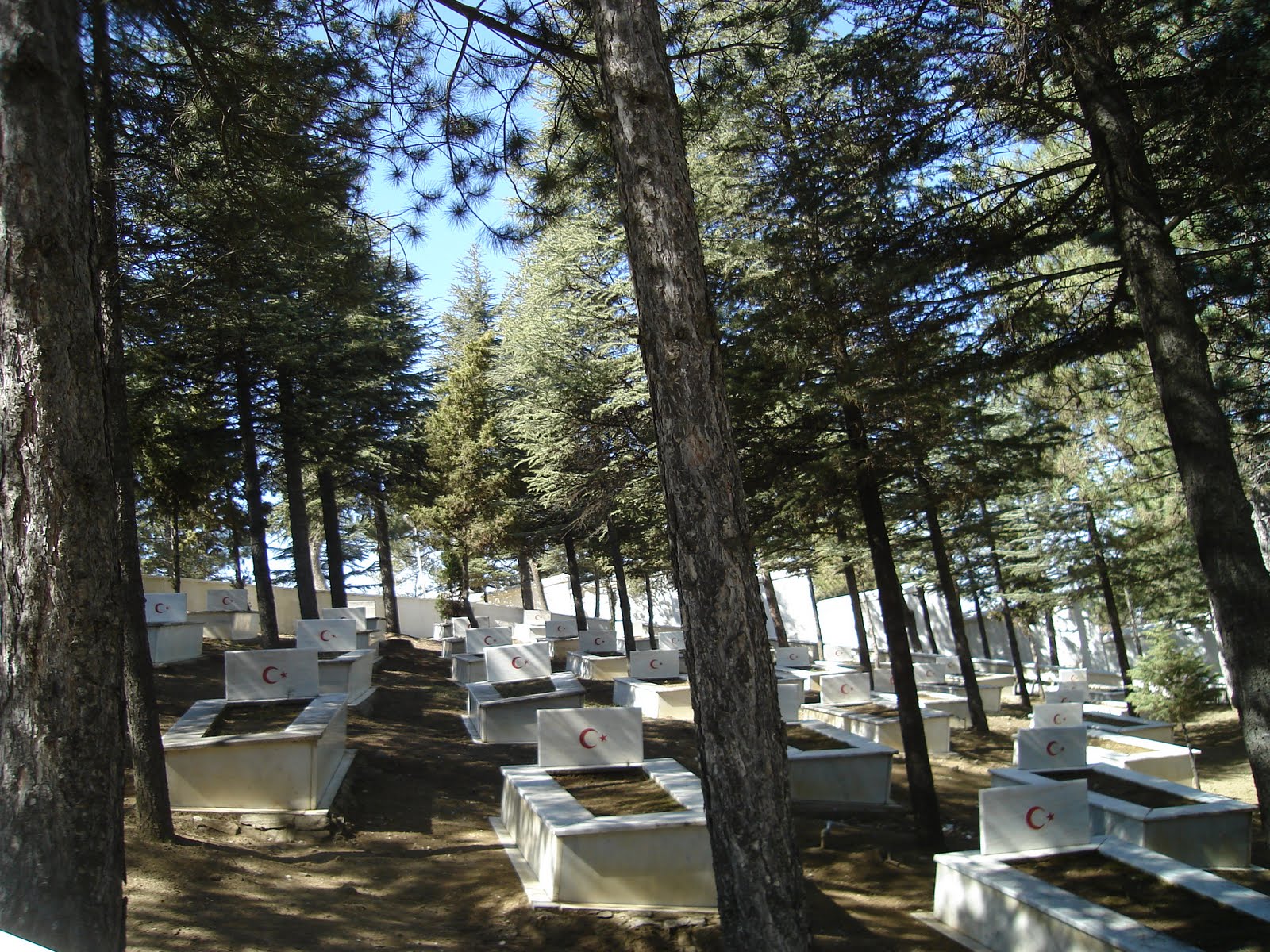
Turkish colleagues went to some historical and cultural places in February and in March as the project aims. In february they visited some historical places in the west of anatolia, related to Turkish war of indepence (it had happened between 1919 - 1922, against Greeks).


The Greco-Turkish War of 1919–1922, also called the War in Asia Minor or the Greek campaign of the Turkish War of Independence or the Asia Minor Catastrophe, was a series of military events occurring during the partitioning of the Ottoman Empire after World War I between May 1919 and October 1922. The war was fought between Greece and Turkish revolutionaries of the Turkish National Movement that would later establish the Republic of Turkey.

The Greek campaign was launched because the western Allies, particularly British Prime Minister David Lloyd George, had promised Greece territorial gains at the expense of the Ottoman Empire. It ended with Greece giving up all territory gained during the war, returning to its pre-war borders, and engaging in a population exchange with the newly established state of Turkey under provisions in the Treaty of Lausanne.

The collective failure of the separate military campaigns of Greece, the
Armenians, and the French against the Turkish revolutionaries forced the Allies to abandon the Treaty of Sèvres. Instead, they negotiated a new treaty at Lausanne. This new treaty recognised the independence of the Turkish Republic and its sovereignty over Eastern Thrace and Anatolia.
Source: Wikipedia


Second Place:
Bursa

Bursa is the fourth biggest city of Turkey. It has many cultural and historical places.


Wednesday, 21 April 2010

Activity List

All partners, please keep attention to do list;
We’ve to do below activities and publish on the blog. Please keep attention; we should publish activity infos, photos, videos and (if exist) other materials on the project blog untill at the end of each months. It’ll be better and organized.

Untill 30th April, each partner going to publish on the blog what have we done so far (after Portuguese meeting).

All partners' pupils' (of course available ages, 12 - 13 - 14 - 15) must contact each other on the net, on the social networks, example; MSN, Sykpee and etc. Should possible for all partners we want to start online communication among the partners' pupils. For this, we want to collect partners' pupils' info via mail. We'll distribute the account info via mail with each partners school's contact person. And each contact person will distribute these among their classes..

For beginning, please send the students’ mail accounts to below addresses (at least 10 students for each class level) until 30th April.
akdenizcelal@yahoo.com, akdenizcelal@hotmail.com, joanadviana@gmail.com


March 2010 Activities
• Experts from the various universities come to discuss the project to-date and assist with the planting and growing process and any other issues.
• Continued Development of Website by Co-Ordinator and other interested schools.
• Making short films in each school
• Ongoing activities; competition and virtual meetings on internet.

April 2010 Activities
• Taking and collecting some photos related to culture and subcultures.
• Discussion; How can we save our local traditions?
• Campaigne 3: “Tell me your local traditions”
• Exchange of experiences via mail, SKYPE, MSN letters and others.

May 2010 Activities
• Discussion; “How can we learn your Lullabies?
• Champaigne 4: “Tell me your Lullabies”
• Voice Records about local lullabies

June 2010 Activities
• Ongoing activities; competition and virtual meetings on internet.
• Evaluation of the year 1 activities

Holy Birth


In Islamic thought, especially in Turkish culture there are many rituels about the prophet Muhammed. First of all, Turks belive all prophets lived on the past. We believe that, there are the five biggest prophets; Abraham, Noah, Moses, Jesus and Muhammed. We love all of them.

Our prophet Muhammed had born in 571 in Arabic Peninsula. Every year we celebrate his birthday during the third week of April. We remember his thoughts, his life, his family members and his thoughts. We pray to God for him. We called this pray kind as "salawath". Example; "we love you", "you're the messenger from God", "you're the best teacher for us", "God bless you", and etc.

Also, most of muslims believe that, Jesus will come again at the and of the earth life (before armageddon) and he will teach of the Muhammed's thoughts with himself.

Our holy book "Qur'an" says; "all people is brother if they believe the God".

Tuesday, 13 April 2010

Condolences To Polish People

We add our regret and condolences for the death of President Lech Kaczinksky and other members who were traveling with him.


Portuguese Team

Our condolences to Polish People…


Our condolences to Polish People…

Lech Kaczynski, Polish president passed away.. We’re sad. He was Turkish friend…

Turkish goverment declared that; while the Polish Leader’s funeral ceremony going on Turkish Flags will half mast in all over the country… (I suppose on Saturday)

God bless you…

Our regards..

Turkish Team

Sunday, 11 April 2010

Thanks for the hospitality, kindness and care

Dear Friends,

We would like to thank you for your Portugal hospitality, kindness and care during our stay to Leiria. We, both teachers and students, enjoyed it very much and are pleased with making new friends. We do appreciate your patience with us - special thanks for Fritz who was incredibly helpful. It is very good to know that one can feel abroad like home:)

Polish teachers and students


Thank you so much,
Marta Horzela.

On the seventh of March we were on the trip to Portugal of Comenius Project. At 4:30 a.m everybody met at the airport in Pyrzowice. The flight was cool but for the first time I was scared. When we arrived to Lisboa we were admiring this beautiful city. When we were in our hotelrooms, we were so tired and we went to sleep .
During the first day in Leiria we went to two schools. The first was elementary school and we were playing with children, the second one was secondary and we met there our Friends: Ana Filipa and her sister Ana Rita.
Next days we had many trips, for example to Nazare Bitch, where we saw the Atlantic Ocean. Every trip was amazing and we could learn very interesting things about Portugal.
The third day we were to dinner in Anabell’s house (she is the headmaster in the school). The meals were tasty but I couldn’t eat shrimps, they are disgusting for me.
One day our best friend Sara and her mother Susana took us to the city centre. It was completely amazing! I bought cool souvenirs for my friends.
On Thursday our friends from Turkey went home and everybody were so sad .
But the next day we went home too.
This trip was wonderful and I’m so happy that I could take part in this project. I’m so glad that I met many gorgeous people and I have learnt Portuguese culture, meals and occupation.
This was indispensable experience.

Thank you so much,
Marta Horzela.

Thursday, 8 April 2010

Easter activities - HUNGARY


Easter in Hungary

Easter is a two-day holiday in Hungary, celebrated with great fanfare and religious fervour. The holidays are enjoyed to the fullest by the Hungarians. People celebrate the occasion by following customs that are native to their homeland.

A number of interesting folk customs are still alive in the European country, which make the festivities colourful. Out of the customs, sprinkling perfumed water and egg-painting are very popular and are followed even today. Go through the following lines to know all about the celebrations of Easter in Hungary.


Busojaras

The most spectacular of the Eastertide folk-festivals is the so called 'busojaras' (walk of the busos, legendary monsters), in the Mohacs district. Men wearing frightening devil masks parade through their village, shouting and making rhythmic sound with the help of old tins and dishes. According to the legends, the locals once managed to scare away the invading Turks by wearing awful looking monster masks. Hence, it has evolved as a very popular custom of Easter in Hungary.


Lent

The Hungarians regard 'Lent' as the Great Fast for Easter. Since meat is forbidden during Lent, the day before Ash Wednesday is called 'húshagyó kedd', which means 'meat abandoning Tuesday'. On Holy Saturday, what is known as 'Nagyszombat' in Hungary, people take food baskets filled with kalács (nice baked cake), red eggs and salt to the church, to be blessed by the clergyman. The blessed food is then eaten by devotes, right after the resurrection ceremonies culminate.

Centuries ago, on Palm Sunday, it was customary to bless not only branches but also the various flowers of the season. In fact, the flowers are still mentioned in the antiphons after the prayer of blessing. Thus, the name Flower Sunday (Virágvasárnap) is used in Hungary.

Good Friday, the most solemn day of Lent was spent in total fast almost all over the country. By the time Good Friday (nagy-péntek) had arrived the house was clean, the baking completed and the eggs decorated. In some regions however, the eggs were deco-rated only on Good Friday!


Midnight Resurrection Ceremonies

Holy Saturday was - still is - the day of blessing of the food. In a food basket kalács, smoked ham, red eggs [decorated eggs] and salt, in some places also wine is taken to the church to be blessed. This food will be eaten after the resurrection ceremonies.

Easter is referred to as the Festival of Meat (HÚSVÉT). On this day meat can be eaten again after the long fast (40 days).

On Holy Saturday, worshippers congregate in the church for midnight resurrection ceremonies. There, the devotees sing Easter songs, chant hymns in the praise of Lord Jesus Christ and admire the sacrifice done by him, for humanity. After the church service is over, people carry a statue of Christ and religious banners and gather to form a procession, which passes through the parish. Chanting of hymns can be heard in the procession.


Egg Painting

Easter eggs are beautifully decorated in Hungary, for the ceremonious occasion. The traditional methods of painting the eggs are still followed by people in the country. The patterns range from simple to intricate, and make the egg look very attractive. The folk patterns are drawn on the eggs by using molten wax. Eggs are also painted. The painting liquid is traditionally made from onion skin, green walnut, wild pear or any other vegetable that yield natural colour.


Easter Monday

(Dousing Day, Water Plunge Monday)

Sprinkling, the very popular custom of Easter in Hungary, is observed on Easter Monday, which is also known as 'Ducking Monday'. On the day, boys playfully sprinkle perfume or perfumed water on girls. Until some time back, young men used to pour buckets of water over young women's heads. In the present time, they spray perfume, cologne or just plain water, and then ask for a kiss and a red egg. This is a very interesting tradition of Easter in Hungary, followed since a long time.


View:

Easter Folk Customs in Hungary

Easter Activities


Diana

Thursday, 1 April 2010

Let's dance!


ah Leiria


Thanks to everyone...

It was the Best performance I've ever seen as a partnership project...
Its unforgottable times...
Celal

Wednesday, 31 March 2010

EASTER! (Páscoa) - Portugal Traditions


EASTER (Páscoa)
Easter is the annual party celebrated by the Jews in memory of the exit from Egipto. The religion prescribes that, for a week from 14 to 21 of the month of Nissan (begining of Spring) the followers should refrain from any fermented food (alcohol, cereals, dry vegetables, etc.); on Easter day, the meal includes roasted lamb immolated according to the Jewish uses.
This party is also celebrated by the Christian religion, that on that day celebrates Jesus Christ's Resurrection. Easter day on the first Sunday after the first moon that followes to the equinox of the Spring, relapses between 22 of March and April 22. It is the time of the full renewal of Nature and as Easter it happens naturally to the abstinence of the Lent, numerous culinary traditions mark that party.
On the whole side, hard eggs, natural or coloured are typical. The habit of offering coloured eggs or decorations starts in Portugal, in the XVth century . The Easter omelette done with eggs «Requests» or put on Holy Friday, is garnished with bacon or similar to well mark the end of this period.
Traditionally, on Easter Sunday, we have a meat plate: generally kid goat or lamb, but a lot of times also Pig (roasted pig or ham). In some areas they includes in Easter menu a stuffed pie of several meats and eggs. The bread that was eaten on Easter Sunday was whiter than the bread homemade and a goody was considered.
The desserts of Easter time show an entire variety of special sweet ; the form of baskets with painted eggs of several colours, crowns with eggs, brioches and pies but above all the chocolate eggs and the almonds are the most representative.
Meals
Kid goat or sheep roasted (Cabrito ou borrego assado no forno)
Ingredients:
1 kid goat of medium size
125 butter gr or margarine
100 bacon gr
4 onions
4 cloves of garlic
2 parrot leaves
1 parsley branch
2,5 dl of white wine
1 colorau teaspoon
500 gr of potatoes
Sal and pepper

Preparation:
Prick 2 onions, the cloves of garlic and the bacon finely. Join them 50 margarine gr and colorau and 1 dl of white wine and season with thick salt and pepper.
Obtain the kid goat and clay it with the prepared.
Dispose in the fund of recipient to roast the remaining onions cut in slices. On these it places the kid goat, join a parsley branch and the parrot and let to be like this 24 hours, in fresh place.
The following day waters the kid goat with the remaining white wine and to the turn it disposes the potatoes cut at rooms. Season with salt and pepper.
Spread the remaining margarine cut in mouthfuls on the kid goat and the potatoes and take to roast in the oven, watering once in a while with the sauce that is going forming.
Accompany with lettuce salad, agrião and fried potatoes.

Dessert
Chocolate Eggs ( Ovos de chocolate )
Chocolate in egg form, usually involving sweetened almonds
The almond can be substituted by a hazelnut, almond paste, chocolate or liqueur.

French almond (Amêndoas Francesas )
Candy made with a covered almond of hardened sugar, flat, white or coloured;
The covered almond of honey was already a candy much appreciated by the Greeks and Roman. The almond just it is made today is mentioned for the first time in 1220.
In that time, the pharmacists they involved in honey certain spices (anisette, cilantro seeds,) called «room spices», consumed to purify the breath and as digestive. When the sugar cane was introduced in Europe, they had an almond or a pumpkin or cucumbersud, covered with sugar. In Portugal the almonds are especially offered in the Passover but also for the occasion of the baptism , in the first communions and in the marriages.
Up to 1850, the manufacture of almonds and was handmade, in suspended basins with a rotation movement to allow the sugar to cover the almonds in regular layers. Only in 1850 the first mechanical turbine was invented. After that, the process was improved (the liquid sugar is pulverised on top of the almonds and dried with hot forced air).
Easter Folar (Folar da Páscoa)
Ingredients:
1 kg flour
250 gr butter or margarine
35 gr of baker's ferment
100 gr of sugar
3 eggs
5 dl of milk Salt 1 spoon of coffee of herb-sweet 1 teaspoon of cinnamon
Happy Easter!
Source: http://www.esec-eca-queiros-lsb.rcts.pt/mpei/festival.html

Tuesday, 16 March 2010